Gallery opened: 21 Aug 2012
Updated 18 July 2022
Franklin's Electric Wheel added
CONTENTS OF THIS PAGE


CONTENTS OF THIS PAGE
Electrostatic Motors |
Gallery opened: 21 Aug 2012 |
An electrostatic motor or capacitor motor is powered by the attraction and repulsion of electric charges. Electrostatic motors are the electrical dual of conventional electromagnetic motors that are powered by magnetic forces. Electrostatic motors typically require a very high voltage power supply, to generate enough attraction and repulsion to even overcome their own friction, and such supplies are difficult and expensive to make. The power output (if indeed any is available for external use) is usually very low. Unless a freely obtainable supply of high-voltage electricity exists the motors are impractical; this has not of course deterred inventors. The prospect of distributing 20 kV or so to every house has some daunting safety issues; what we do in the UK is to distribute at 11 kV to local substations that that change it into a more manageable 230 V. Having said that, the early electricity supply to Cambridge was at 2 kV, with each consumer having their own transformer; this system was introduced in 1891, but it is not currently clear how long it endured.
At a much smaller scale electrostatic motor are, however, an essential part of the molecular machinery of living cells. The bacterial flagellum is driven by a rotary engine built of protein, located at the flagellum's anchor point on the inner cell membrane. This engine is powered by proton motive force, (the flow of protons (hydrogen ions) across the bacterial cell membrane due to a concentration gradient set up by cell metabolism. The process is complicated, and whether it is strictly speaking an electrostatic motor is unclear. To me, at least. A flagellum incudes a mechanical clutch that disengages when motion is not required; I think that is rather awe-inspiring.
There is now much interest in electrostatic motors working at a nano-scale.
Electrostatic motors have a Wikipedia page.
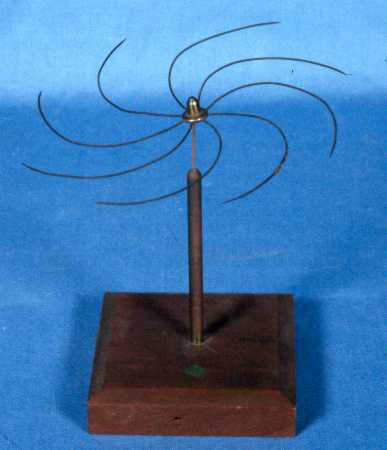 | Left: An eight-point electric whirl: date unknown
|
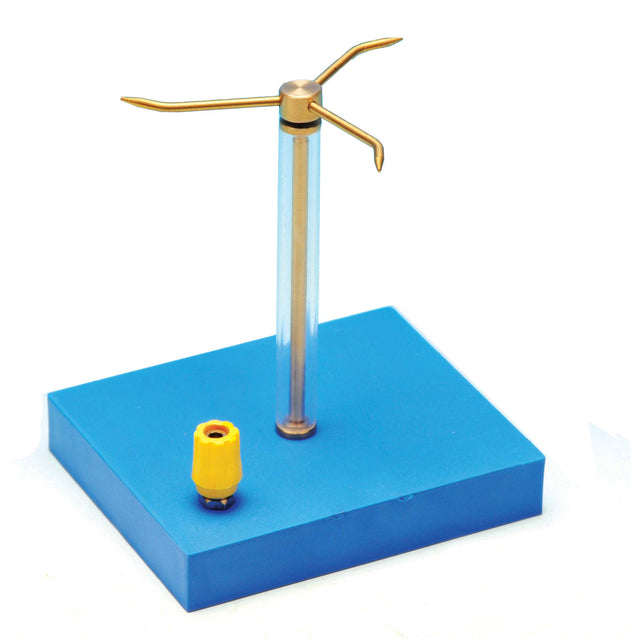 | Left: A three-point electric whirl: now
|
FRANKLIN'S ELECTRIC WHEEL: 1748

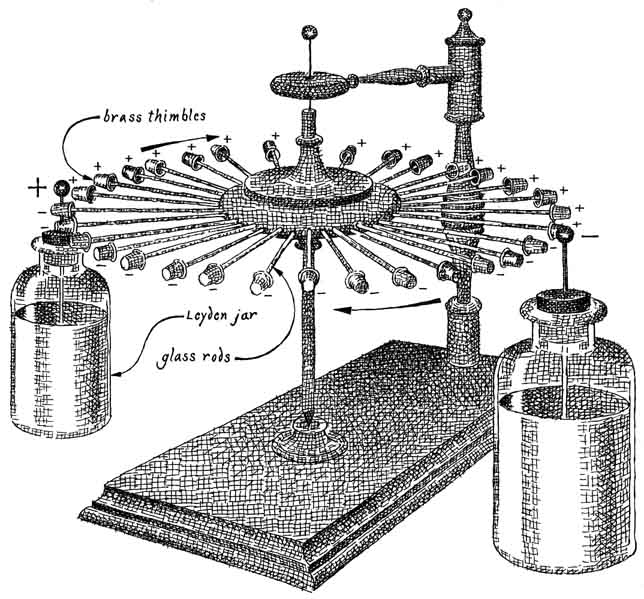 | Left: Benjamin Franklin's Electric Wheel: 1748
|
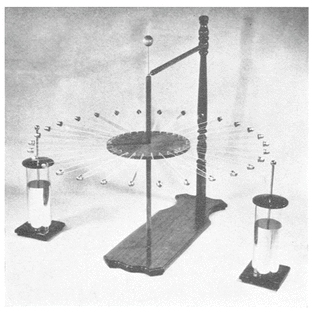 | Left: Franklin's Electric Wheel: modern replica
|
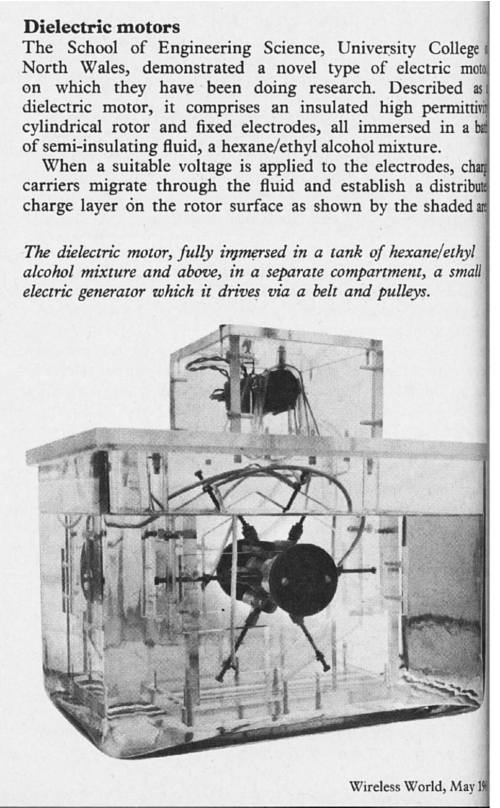 | Left: An electrostatic motor built at the University College of South Wales: 1968
|
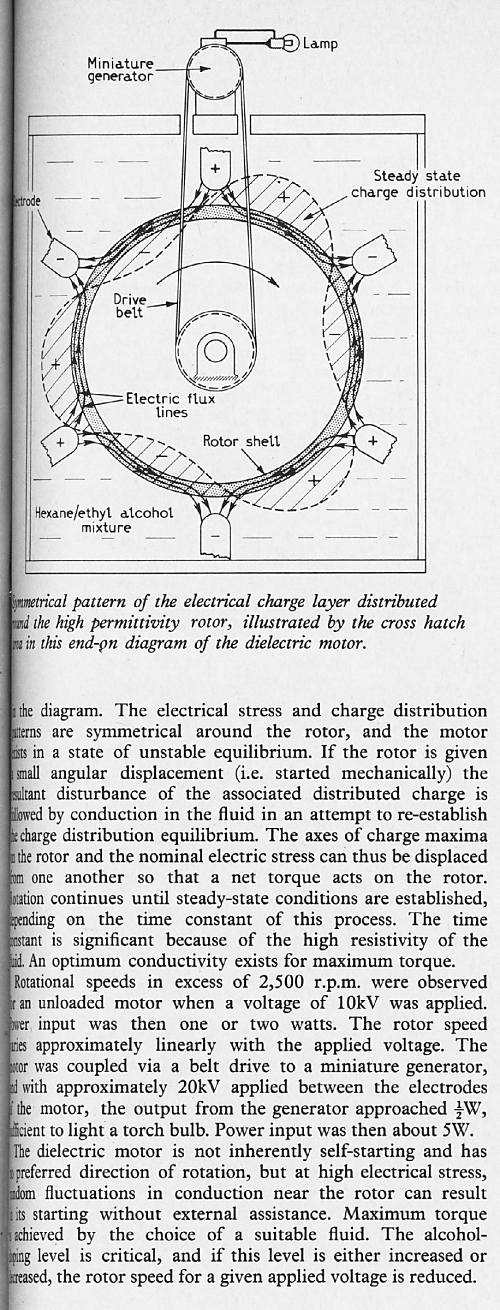 | Left: An electrostatic motor built at the University College of South Wales: 1968
|

|